

Unpacking the Problem
High-rise renovations are not uncommon, but they are complicated, and they're always eventually necessary.
Like any building, high-rises age through regular wear and tear, and while regular maintenance is critical for ensuring longevity of a building, eventually certain components will need to be replaced. For a single-family home, replacing the roofing is a fairly regular practice. If the roof is made of asphalt shingles, you can expect it's lifespan to range between 20-30 years. Alternatively, a more expensive composite metal roof might have a lifespan of around 50-70 years, both dependent on how frequently it's maintained.
Just like that single-family roof, the façade of your high-rise building will eventually need to be replaced. However, changing the entire envelope of a high-rise is a considerably more difficult and expensive task. To add to this, the condominium ownership model presents its own unique set of constraints related to how things are funded, and which renovations you pursue. A condominium is a form of collective ownership, and a renovation to your building requires collective decision making.
Listed below are five categories of challenges that high-rise condominiums can expect to face when pursuing a renovation to their building.





——————————————————
Financial Challenges
Condominiums are required to collect financial contributions from owners towards their reserve fund, which pays for services like regular maintenance and repair of components. Contributions are determined with reference to a reserve fund study, which assesses your building condition and projects future costs. Commonly, these projections are based on the assumption that replacements are conducted on a like-for-like basis.
This means that your reserve fund may be based on replacing your building envelope with the exact same product.

If your building's envelope was already performing poorly, a replacement envelope of the same make and specifications might be even worse considering Toronto's future climate will be considerably warmer than it is now. A poorly operating building won't just have performance issues, but may come with significant financial risks as well. Insurance premiums can go up if your building is in disrepair and at risk of failure in severe weather events like heat waves or heavy rainfall.
By limiting funding towards a renovation to your building, you may be putting yourself at greater financial risk.
——————————————————
Governance Challenges
A condominium corporation is a form of collective ownership operating according to its internal regulations. In Ontario, condominium by-laws are initially established at the time of registration, and abide by the Ontario Condominium Act. For newly built condominiums, these by-laws have been established by the developer responsible for your buildings construction, and it's at the discretion of the corporation to add or revise those by-laws.
Changing your condominiums by-laws requires collective decision making through a board meeting.
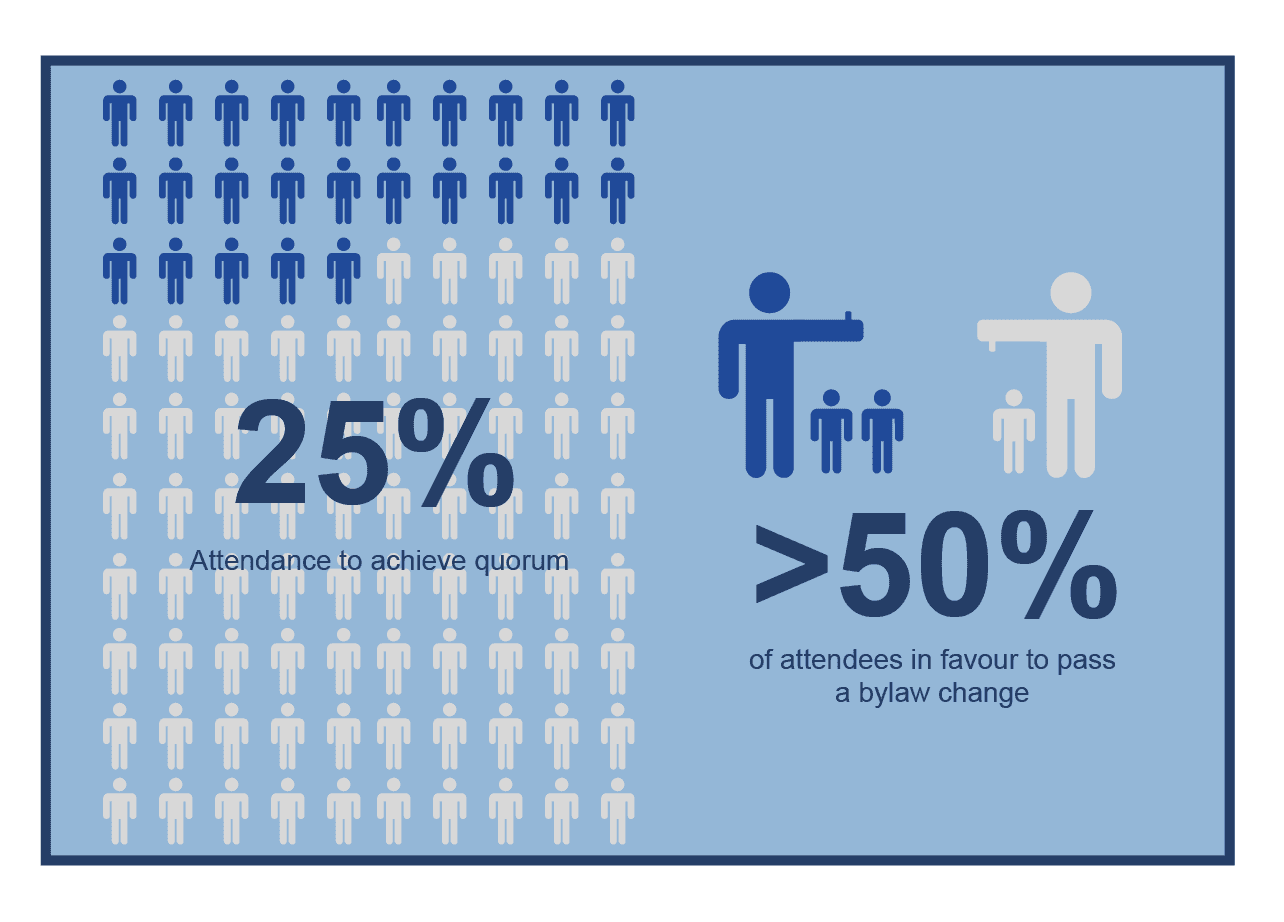
Doing business as a condominium requires achieving quorum at a meeting. According to Section 50 of the Ontario Condominum Act:
50 (1) A quorum for the transaction of business at a meeting of owners, other than a meeting of owners mentioned in subsection 42 (6), section 43 or subsection 45 (2) or such other meetings that are prescribed, is those owners who own 25 per cent of the units in the corporation. 2015, c. 28, Sched. 1, s. 45 (1).
If quorum is not met by the second consecutive attempt to conduct business at a board meeting, quorum can be achieved with 15% of the owners of the units in the corporation for the third or later attempt. Once quorum is met, any attempt to adjust the by-laws of your condominium required 50% approval from those owners in attendance.
This means that an effort to adjust your reserve fund contributions requires approval from a minimum of 7.5% - 12.5% of owners in your building.
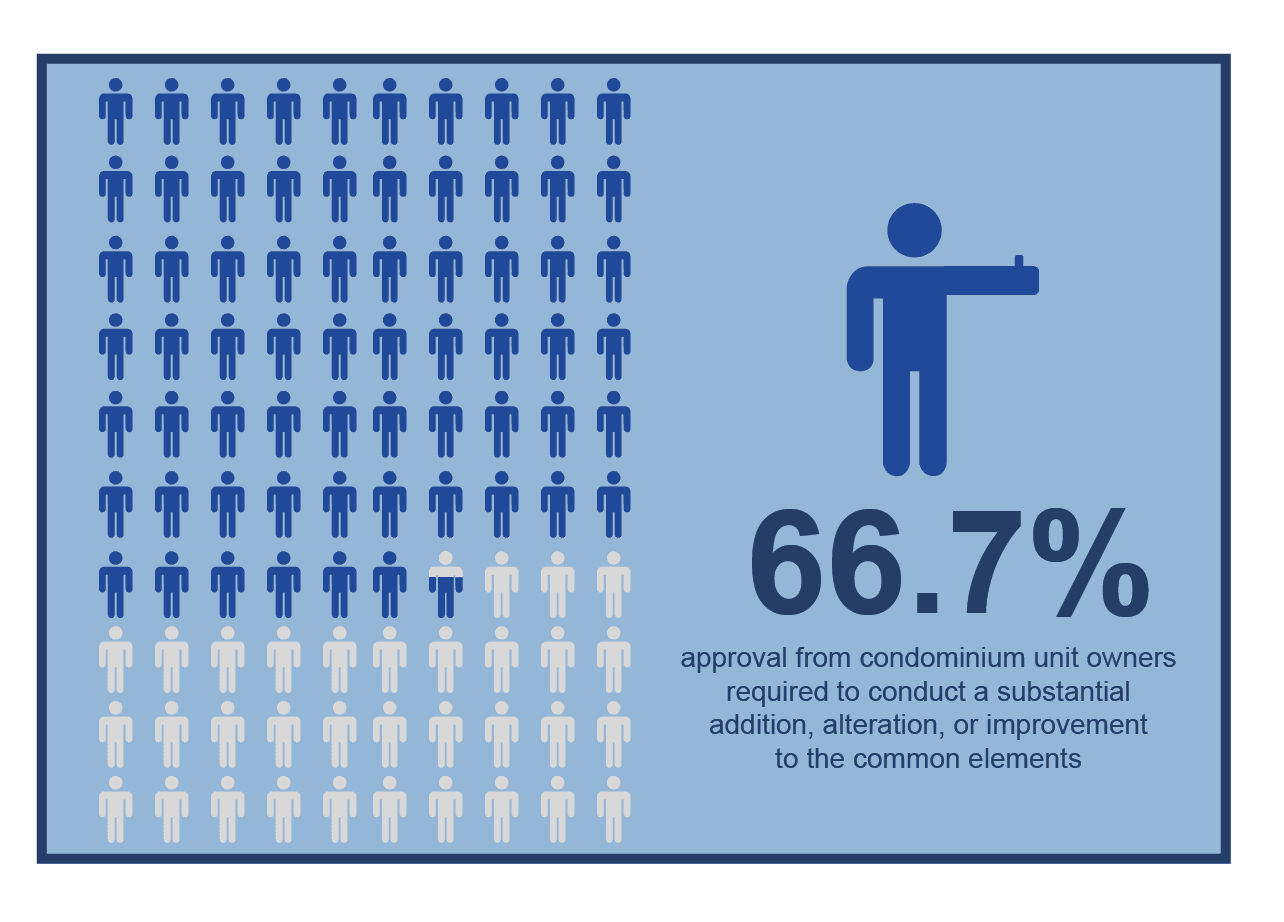
There are additional exceptions to Section 50 of the Ontario Condominium Act including Section 97, which refers to changes to common elements and assets.
97 (4) Despite subsection (3), the corporation shall not make a substantial addition, alteration, improvement to the common elements, a substantial change in the assets of the corporation or a substantial change in a service that the corporation provides to the owners unless the owners who own at least 66 2/3 per cent of the units of the corporation vote in favour of approving it. 1998, c. 19, s. 97 (4).
A substantial improvement to your buildings envelope requires approval from 66.67% of the owners of units in your building.
Even though you may have a desire to enact substantial renovation to your building to improve on your existing building façade, it's critical to communicate and cooperate with fellow condominium owners about your concerns. Getting your neighbors engaged about the environmental, energy, and resilience benefits of a better renovation will be critical.
——————————————————
Displacement Challenges
If the exterior envelope or windows of your building need to be replaced, you can expect that residents will need to leave their suites. This will be true regardless of whether your pursue a substantial renovation or a like-for-like replacement of building components.
With units in high-rise condominiums ranging from the hundreds to upwards of a thousand, a building renovation can mean mass displacement and significant cost.
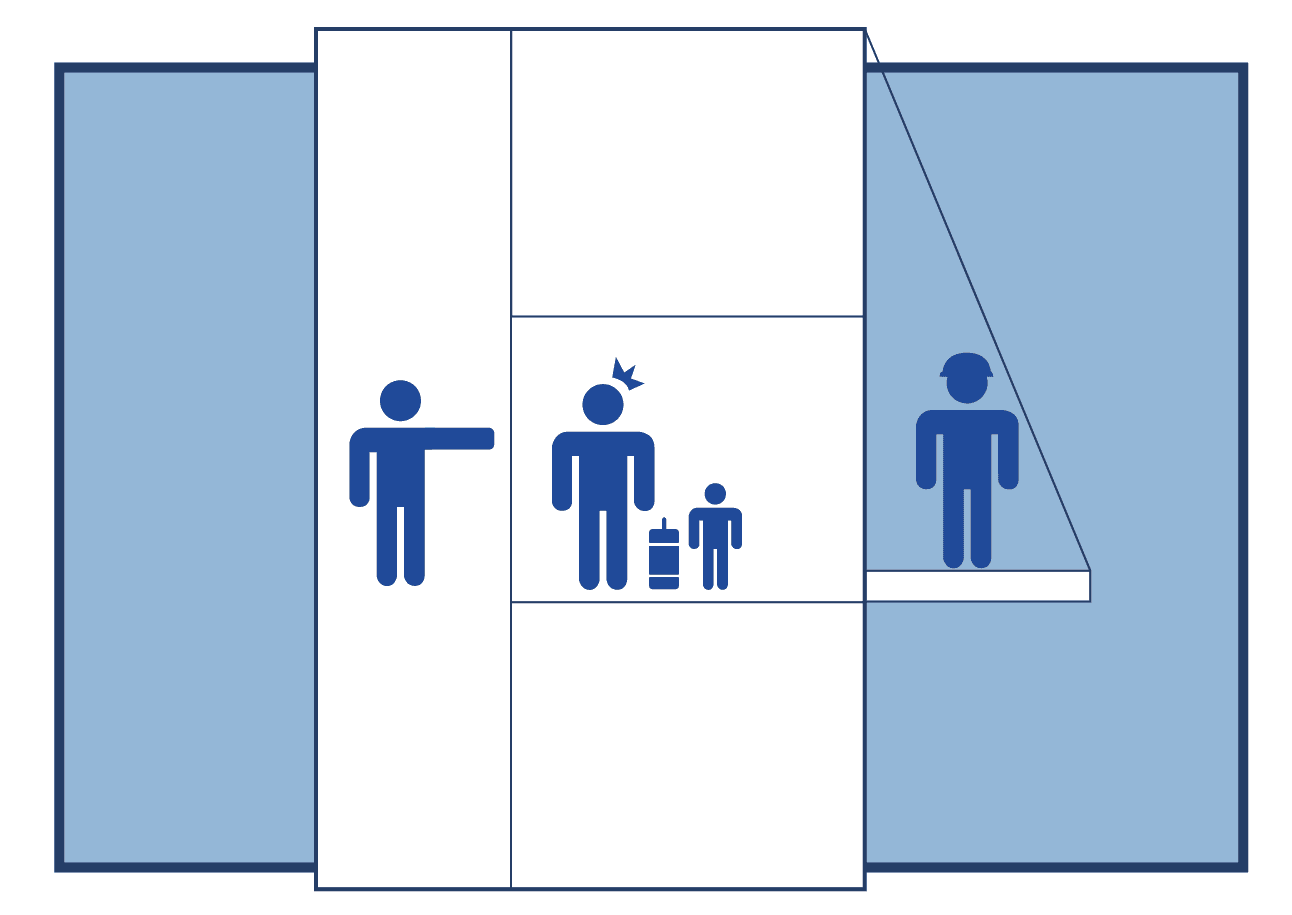
Not everyone has friends or family nearby to stay with, so short-term leases or hotel stays may be a requirement among your fellow condo residents. It's critical to raise concerns about displacement with you condominium corporation, your local city councellor, and your elected officials. While renovation may be an issue applicable to your building, the displacement of residents is an urban logistics issues that could be alleviated with government support and recognition.
——————————————————
Site Logistics
Whether your building is surrounded by green space or right in the middle of a downtown intersection, your site may pose challenges for enacting a renovation to your building. Most renovation scenarios available to you in either a substantial improvement or a like-for-like replacement will require space for trucks, construction materials, or scaffolding. On top of the building permit you'll need to secure to conduct a renovation, you can also expect to need a site protection permit since the majority of the work will be done overhead. The addition of a off-site, truck, or rooftop crane also comes with a need for a crane permit.
In constrained site like downtown Toronto, this additional infrastructure will require you occupy the areas around your building throughout construction. A street occupation permit might be needed to close of adjacent streets off from pedestrian and vehicular access.
——————————————————
Technical Challenges
Your building envelope is unique and it's specific constraints should be discussed with design professionals when considering a renovation or replacement. However, different envelope systems can have a similar logic relating to how they're constructed, how they manage air, moisture, and heat, and how they connect to the structure of your building.
Many contemporary high-rise condominiums in Toronto are built with window wall façade assemblies. These systems are designed to span the gap between your floor slabs, and connect to the floors above and below by overlapping the slab. This wall system is "sandwiched" between floors, and the joints connecting components are mechanically fastened and sealed. This envelope system is relatively inexpensive when compared to other glazed façade systems like curtain walls, can be constructed on site, and the number of similar systems built in Toronto can attest to a skilled workforce familiar with its installation.
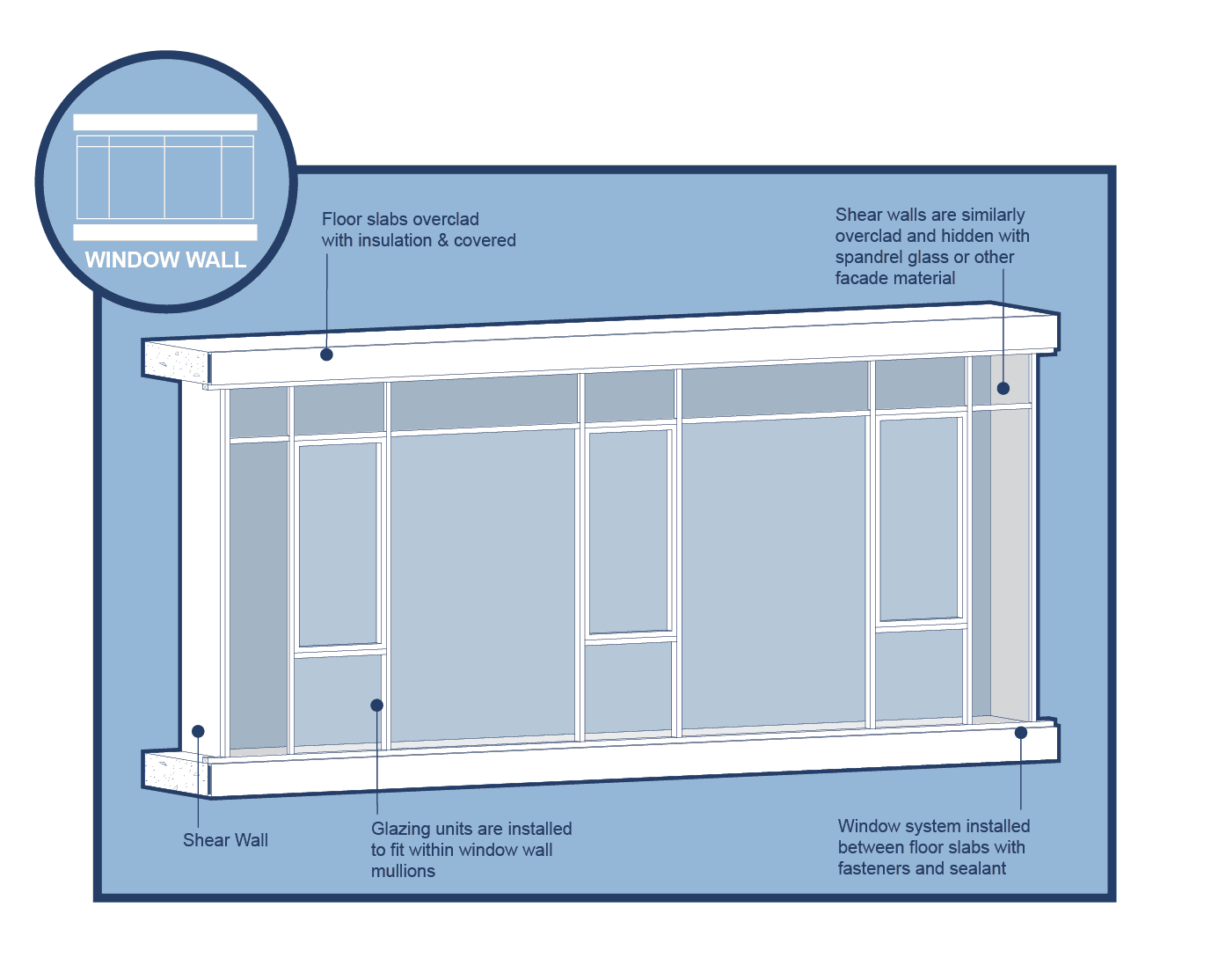
While these systems can afford wonderful views to the outside and excellent natural light, they don't perform as well as some older, masonry high-rise envelope systems. The surplus of interfaces between envelope components and the reliance on mechanical fasteners and sealants means that these systems have a larger number of cracks for water and air to leak in and out of. Additionally, high-rise units with a window-wall façade can be prone to overheating in summer if mechanical conditioning systems are not operating.
In the case of a summer power outage, your suite could be a risk to your health.
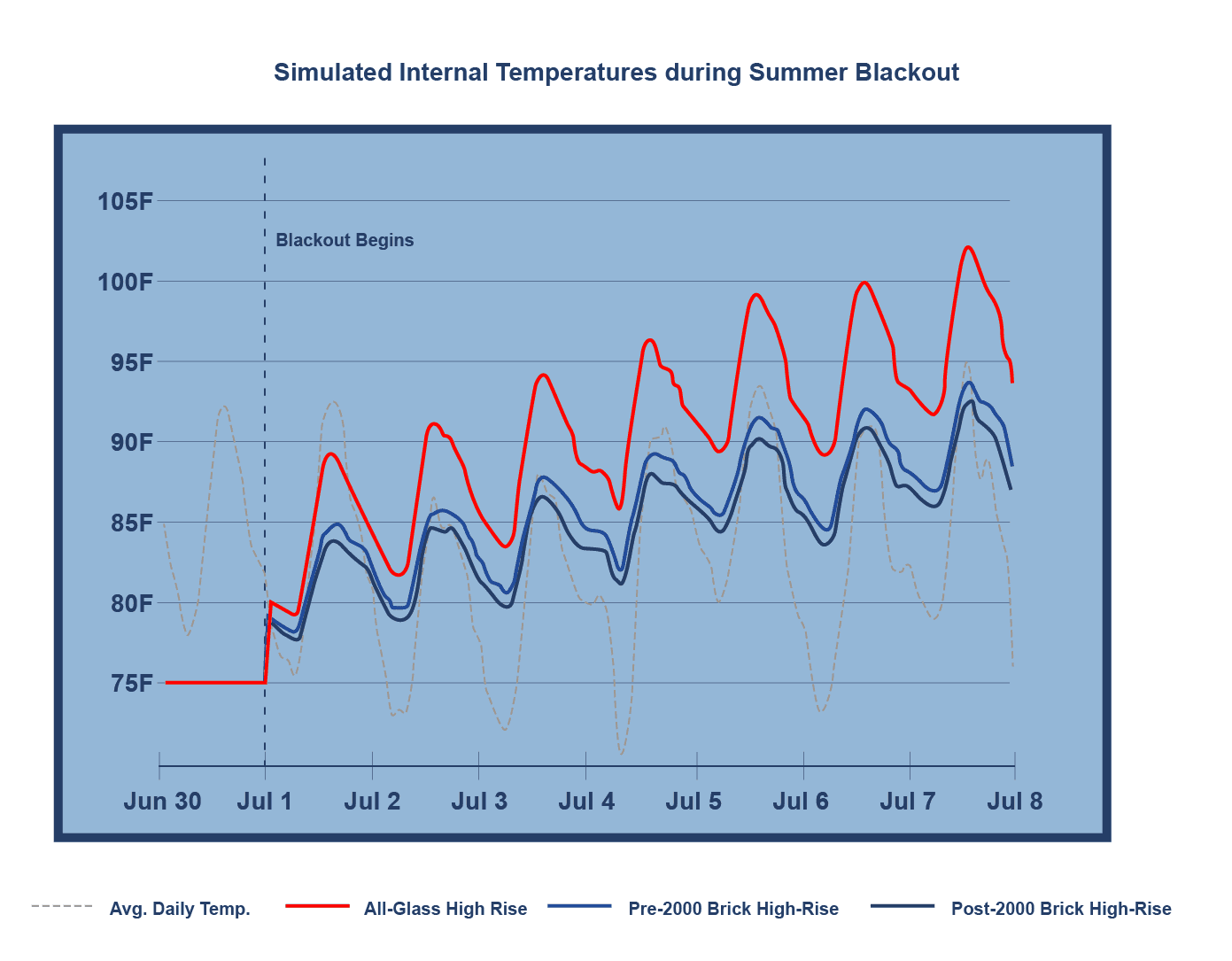
With climate projections suggesting an increase in average daily temperature, greater frequency of extended heat waves, and a larger volume of daily rainfall, window wall envelope systems may be particularly susceptible to climate change.